

Your gut already has trillions of bacteria. Are you feeding the right ones?
Walk into any pharmacy or scroll any wellness brand and the message is the same: take a probiotic. The biggest names in gut health are united by a probiotic-first logic. It is well-marketed, widely trusted, and - according to a growing body of research - the wrong place to start.
Think of it as seeds and fertilizer. Probiotics bring the seeds, but your gut already has trillions of bacteria developed over a lifetime, and a highly competitive ecosystem is not empty soil waiting to be planted. Without the right conditions, new arrivals rarely establish and rarely last. Fertilizer first. Prebiotics are the infrastructure that creates those conditions - the fiber substrate that feeds, sustains, and diversifies the microbiome you already have. LYMA's formulation is built on this principle, and it changes the logic of everything that follows.
Prebiotic vs probiotic: seeds vs fertilizer - and why the analogy only gets you halfway there
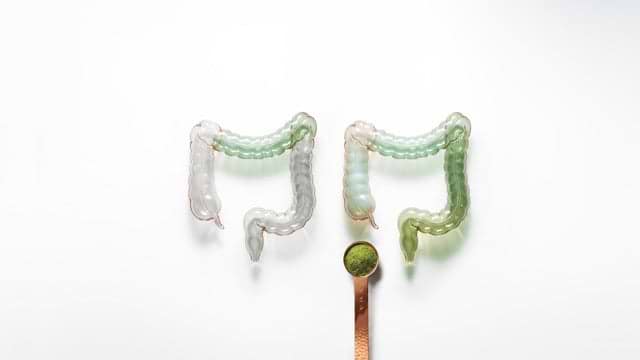
The comparison most people reach for is simple: probiotics are the beneficial bacteria, prebiotics are the food that feeds them. Seeds and fertilizer. It's a reasonable starting point - and it significantly undersells the problem with how most people approach gut health.
Probiotics are live microorganisms - bacteria and sometimes yeasts - that, when consumed in adequate quantities, may confer a benefit on the host. The WHO and FAO definition is deliberately measured. The benefit is conditional: it depends on the strain, the dose, whether the bacteria survive transit, and whether they encounter a hospitable environment on arrival. Getting them there is only part of the challenge.
Prebiotics are substrates selectively used by your existing gut microorganisms to confer a health benefit. They are not live organisms. They are the structural material your resident gut bacteria ferment to produce short-chain fatty acids - butyrate, propionate, and acetate. These are not incidental byproducts. They are the primary mechanism through which gut health translates into systemic benefit: supporting the gut lining, immune regulation, and the gut-brain axis.
This is where the seeds-and-fertilizer analogy breaks down. Probiotics are not seeds planted in empty soil. Your gut already hosts trillions of bacteria - an ecosystem developed over decades. Probiotics are, at best, transient visitors capable of temporarily shifting the gut environment. Prebiotics are the infrastructure investment - feeding, sustaining, and diversifying the microbiome you already have. Understood correctly, this distinction changes the entire logic of supplement selection.
| Prebiotics | Probiotics | |
|---|---|---|
| Action | Feed your existing gut bacteria | Introduce new live bacteria |
| Nature | Structural: selectively fermented fiber | Functional: live microorganisms |
| Microbiome impact | Support resident microbiome diversity | Provide transient, strain-specific effects |
| SCFA production | Drive SCFA production: butyrate, propionate, acetate | Benefit conditional on strain, dose, and survival |
| Duration of effect | Sustained with consistent intake | Typically diminish without prebiotic support |
| Colonisation | No colonisation uncertainty | Rarely occurs; transit is short-lived |
Why probiotics alone are not enough: the limits the industry rarely mentions
Probiotics dominate the gut health supplement market. They are the most purchased, most recognizable, and most heavily marketed category in the space. The research, read carefully, tells a more complicated story than the packaging suggests.
The first challenge is colonisation. Despite the language of "seeding" the gut, probiotic bacteria do not establish lasting residence in most people. A landmark 2018 paper in Cell by Suez et al. - among the most comprehensive studies of probiotic dynamics in humans - used colonoscopy-based sampling to show that in many individuals, probiotic bacteria passed entirely through the gut without taking hold, regardless of dose. The gut is not empty terrain waiting to be settled. It is a highly developed, competitive ecosystem where external bacteria face a significant establishment barrier.
The second challenge is strain specificity. The term "probiotic" encompasses thousands of bacterial strains with vastly different effects. Evidence for one strain tells you nothing meaningful about what a different species will do. The research base for most commercially available probiotic products is limited, and the strain studied in a clinical trial is rarely identical to what ends up in a supplement on the shelf.
The third challenge - and the most relevant to the prebiotic vs probiotic question - is dependency. Probiotic bacteria that do survive transit require prebiotic fiber to ferment. Without it, their presence is short-lived and their SCFA output is negligible. You cannot meaningfully increase butyrate production by introducing bacteria into a gut that lacks the fiber substrate to support fermentation. The fuel has to come first.
How butyrate is produced and why fiber length determines production depth - the mechanism behind why not all fiber produces the same SCFA output.
What are prebiotics - and why fiber type changes everything
Not all prebiotic fiber is equal. This is precisely where most conversations about the prebiotic vs probiotic question fall short of the science that actually matters.
Prebiotic fiber spans a broad category: fructooligosaccharides (FOS), galactooligosaccharides (GOS), inulin, resistant starch, pectin, arabinoxylan - and these vary considerably in chain length, fermentation rate, and which bacteria they support, in which regions of the colon.
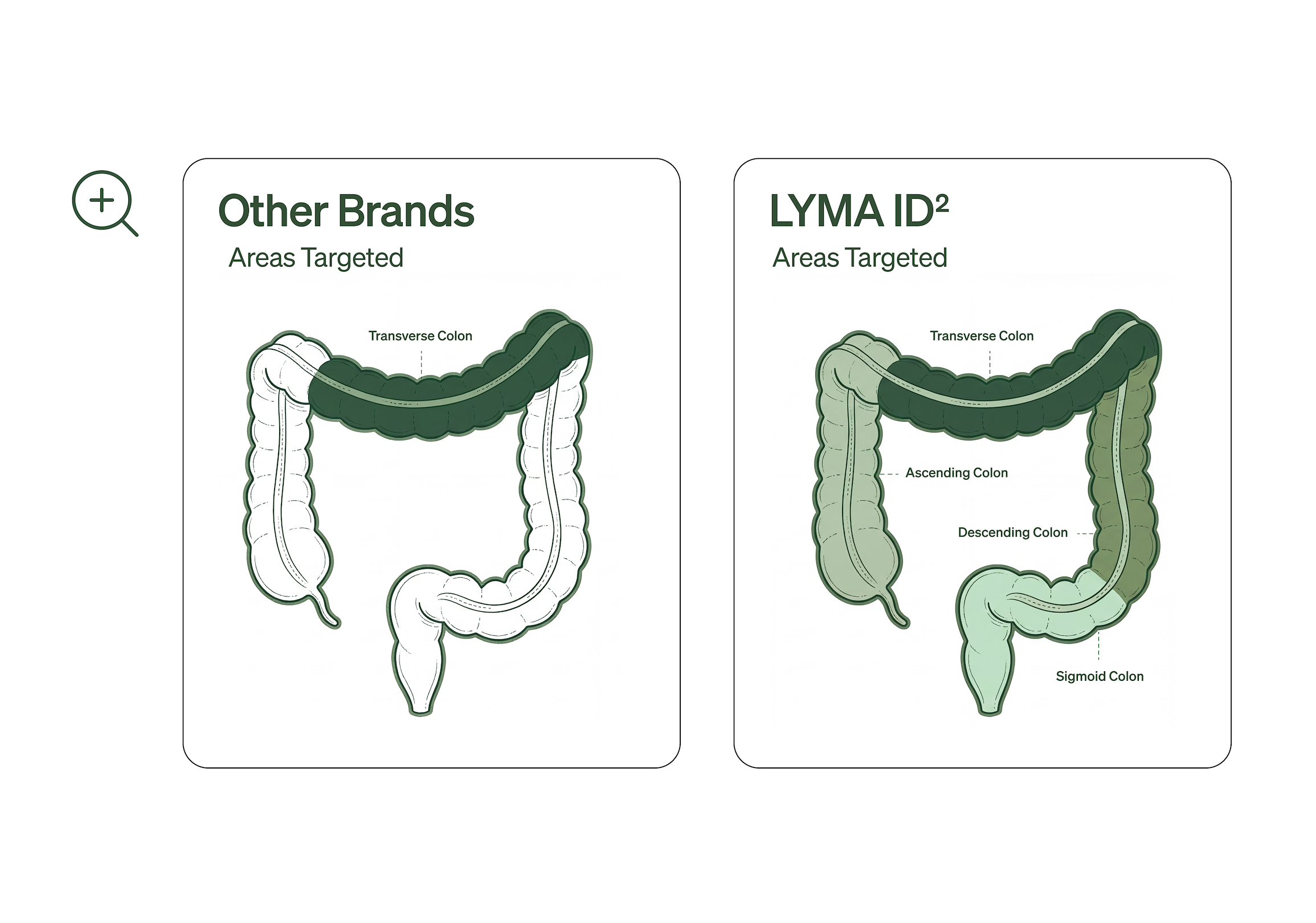
Short-chain, rapidly fermented fibers - like FOS and short-chain inulin - are broken down quickly in the proximal colon. They produce acetate and propionate, but leave the distal colon - where butyrate-producing species are most active - with little to ferment. Longer-chain fibers resist early fermentation, traveling further to reach the distal colon intact. There, they support sustained butyrate production across a wider section of the gut.
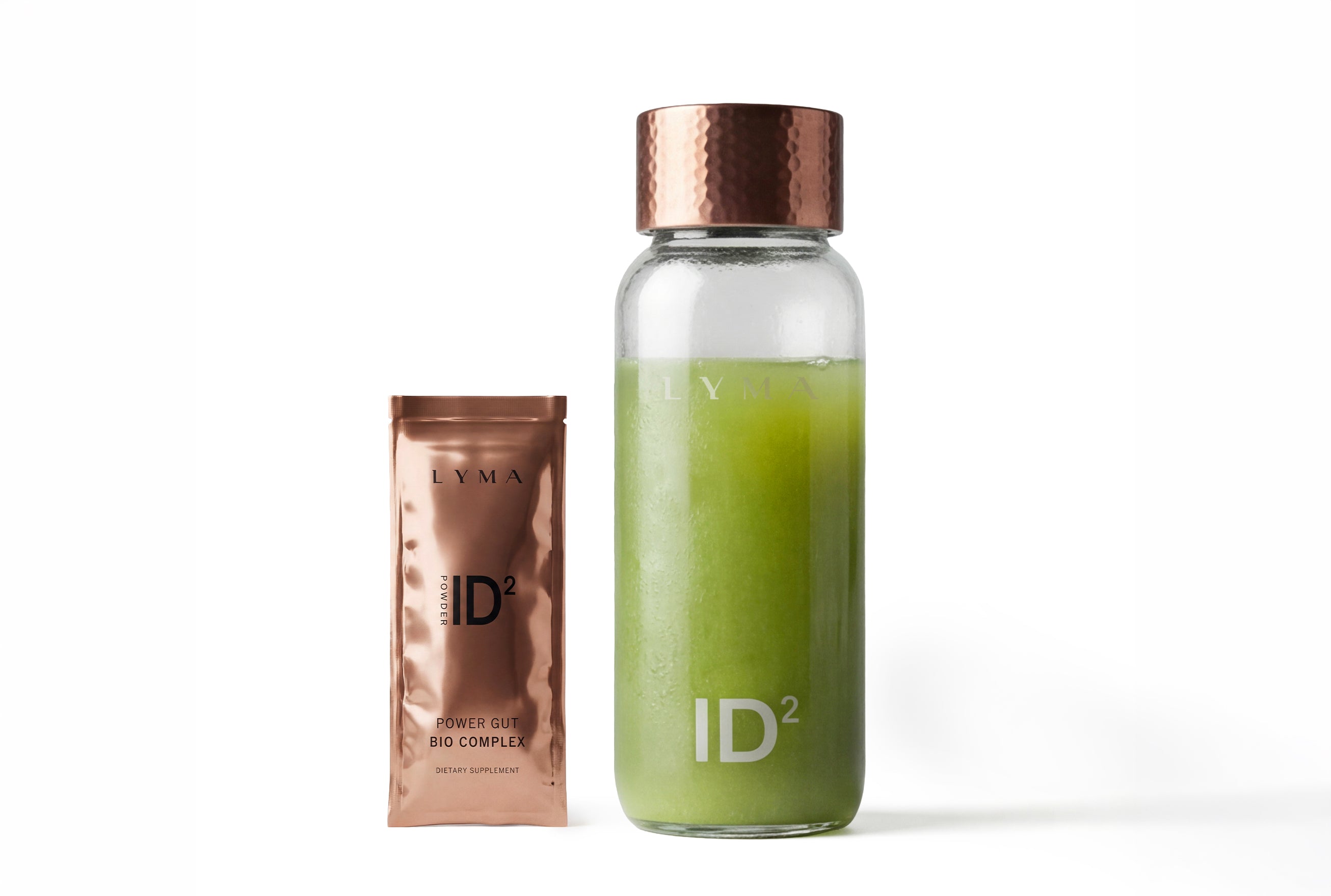
This distinction - fiber length and fermentation geography - is the scientific territory central to LYMA's formulation approach with ID². The goal is not maximum fermentation speed. It is maximum fermentation reach: fiber that nourishes the full length of the colon, including the distal regions that most supplement formulations never address.
Prebiotic foods - chicory root, Jerusalem artichoke, garlic, onion, leek, asparagus, slightly underripe bananas, oats, and flaxseed - can contribute meaningfully to gut microbiome diversity as part of a varied diet. In practice, however, most adults in the US consume under 18g of fiber daily - well below the recommended 30g minimum - and with too narrow a range of fiber types to support the full-spectrum fermentation the gut requires.
Fibermaxxing: the trend that's reframing fiber as a primary health intervention - why TikTok got ahead of the science and what the research actually says.
How to choose a gut health supplement - what the evidence actually supports
The science suggests a clear priority order when evaluating gut supplements - whether prebiotic, probiotic, or a combination. Probiotics are not without value. But their value is specific and conditional, and it depends almost entirely on having a prebiotic foundation in place first.
When assessing a prebiotic supplement, the relevant questions are: does it contain long-chain fiber, or only short-chain? Is the range of fiber types broad enough to support fermentation along the full length of the colon? Does it provide sufficient total fiber to make a meaningful difference - most adults need to add 12–15g of prebiotic fiber daily to reach recommended intake levels? And does it draw from multiple fiber sources, or a single isolated compound?
When assessing a probiotic supplement, the questions are equally specific: is the strain backed by human trials for the particular outcome you're targeting? Is there evidence it survives to the colon - through an acid-stable capsule or enteric coating? And critically, does it include prebiotic fiber, or does it rely entirely on diet to provide it?
The best prebiotic supplement for gut health is not simply the one with the highest fiber content. It is the one formulated with genuine attention to fiber type, fiber length distribution, and the full geography of colonic fermentation - not just the first portion of the gut that most products reach and stop at.
Understand the gut-brain axis and why SCFA production matters beyond digestion - how butyrate produced in the gut shapes mood, stress response, and cognitive clarity.
Your Questions About Prebiotics and Probiotics
What is the difference between prebiotics and probiotics?
Prebiotics are non-digestible fibers that feed your existing gut bacteria, driving the production of short-chain fatty acids like butyrate. Probiotics are live bacteria that, when consumed in adequate quantities, may temporarily shift the gut microbiome. The key difference: prebiotics sustain and diversify the microbiome you already have; probiotics introduce transient bacteria that rarely colonise long-term. The evidence increasingly supports starting with prebiotics.
Should I take prebiotics or probiotics?
For most people, prebiotic fiber is the more foundational intervention. Probiotic bacteria require prebiotic fiber to survive and produce meaningful effects in the gut. Without the prebiotic substrate, probiotic bacteria pass through quickly without establishing lasting benefit. The fiber-first approach - consistently increasing diverse prebiotic fiber intake - is the most evidence-supported starting point for long-term gut health.
What are the best prebiotic foods?
The best prebiotic foods include chicory root, Jerusalem artichoke, garlic, onion, leeks, asparagus, slightly underripe bananas, oats, flaxseed, and apples. Variety matters as much as quantity - different prebiotic fibers feed different gut bacteria in different regions of the colon. Most adults need significantly more fiber diversity than a standard diet provides.
Do probiotics actually work?
Probiotics can be effective, but the evidence is strain-specific and condition-specific. Most commercially available probiotic supplements are not identical to strains used in clinical trials. Research, including a 2018 Cell study, showed that many individuals' guts resisted probiotic colonization entirely. Probiotics are most effective when combined with adequate prebiotic fiber, which provides the fermentation substrate they need to function.
What are short-chain fatty acids and why do they matter?
Short-chain fatty acids - including butyrate, propionate, and acetate - are produced when gut bacteria ferment prebiotic fiber. Butyrate is the primary energy source for cells lining the colon and supports gut lining integrity. Propionate and acetate influence immune signaling, appetite regulation, and brain function. SCFA production is the primary mechanism through which both prebiotic fiber and probiotic bacteria deliver gut health benefits.
What is the fiber-first approach to gut health?
The fiber-first gut health approach prioritizes increasing diverse, long-chain prebiotic fiber intake as the foundation of gut microbiome support, before adding probiotics. It is based on the principle that gut bacteria need a fermentation substrate before they can produce the short-chain fatty acids - particularly butyrate - that underpin gut health benefits. Fiber type and length matter as much as fiber quantity.
Discover LYMA ID² - the prebiotic-first formulation built on the fiber-first principle.
You might also like


