

The Smarter Alternative to a Facelift? A Plastic Surgeon Makes the Case for the LYMA Laser PRO.
Dr Graeme Glass has performed countless cosmetic procedures. He knows, better than most, what surgery can do - and what it costs. Which is why what he says next matters.
"The question I'm asked most often is whether there is something between a good skincare routine and surgery. For years, I had to be honest: not really. That has now changed. The evidence is there. I helped build this laser, and I am confident saying it belongs in that gap."
Dr Glass is a plastic surgeon. His credibility has been built based on his skills with a knife, not a device. So when he argues that for the first signs of aging, laser therapy is now the more intelligent first response, his opinion carries weight.
Here is his case.
There is a moment most women recognize
The jawline softens slightly. The neck no longer looks exactly as it did. Something in the mirror has shifted - gradually, then suddenly.
For generations, the instinct that followed had only two answers: accept it, or consider surgery.
Today, Dr Glass, a surgeon with every reason to recommend surgery, is recommending something else first.
Why a plastic surgeon is making the case for laser
Dr Glass didn't come to LYMA as a skeptic converted by marketing. He came as a scientist, reviewed the research, and helped engineer the device. That distinction matters.
"Most at-home devices work on the surface. The LYMA laser works at the level of the cell. That is a fundamentally different category of technology, and I say that as someone who has spent a career understanding what actually moves tissue."
In 2025, a landmark study published in the Aesthetic Surgery Journal used gene expression analysis - measuring biological change at the level of human dermal cells - to evaluate what near-infrared laser therapy at 808nm actually does. Not before-and-after photographs. Not subjective ratings. Gene expression data.
The findings were unambiguous. The 808nm laser activated 45 genes associated with skin regeneration, collagen production, and cellular renewal, including:
- HBEGF - upregulated 31× - the growth factor active in wound healing and tissue regeneration
- TXNRD1 - upregulated 32× - governing the skin's antioxidant defense, protecting existing collagen from breakdown
- SIRT1 - upregulated 6× - the longevity gene, regulating cellular aging and DNA repair
- VEGFA - upregulated 5.5× - promoting blood vessel formation and nutrient delivery to skin tissue
A separate randomised controlled trial confirmed the clinical translation: 78% mean reduction in wound area, with 4 in 10 participants achieving complete healing. The control group showed zero change.
"LYMA's near-infrared cold laser technology is absorbed directly by your cells. No trauma. No damage. Just cells that function younger. I wouldn't stake my clinical reputation on it if the science wasn't there." Dr Graeme Glass, Plastic Surgeon & LYMA Aesthetic Director.
The surgeon's honest assessment of surgery
This is not a dismissal of surgery. Dr Glass performs it. He respects it. But he is clear about when it is - and is not - the right tool.
"Surgery is the most powerful option available when laxity is severe enough to require physical tissue repositioning. But surgery for early-stage laxity is a disproportionate response - and in my view, the wrong starting point. You are committing to weeks of recovery, significant cost, and lifestyle restriction for a problem that regenerative technology can now address with peer-reviewed evidence behind it."
The practical realities of surgery are significant:
- Cost: $15,000–$50,000 per procedure in the US
- Recovery: 2–4 weeks of visible bruising, swelling, and activity restriction
- Sun restriction: 3–6 months post-procedure
- Mechanism: Addresses skin as it exists at the time of the procedure - aging continues beneath the surface regardless
Surgery also doesn't address the biology of aging. It repositions and removes. The LYMA Laser PRO stimulates the skin's own regenerative pathways, producing new collagen, renewing structural proteins, and building results that continue to improve with consistent use.

Laser vs. Surgery: the honest comparison
|
Surgery |
LYMA Laser PRO |
|
|
Investment |
$15,000–$50,000. Per procedure. |
One-time purchase. Every zone included. |
|
Downtime |
2–4 weeks visible recovery. Activity restricted. |
Zero. Daily use fits entirely around your life. |
|
Sun restriction |
3–6 months post-procedure. |
None. No lifestyle restrictions of any kind. |
|
Mechanism |
Physical repositioning and removal of tissue. |
Cellular activation - 45 genes stimulated. No damage, no injury. |
|
Coverage |
Per procedure, per area. |
Face, jowls, neck, décolletage, arms, body - one device. |
|
Evidence |
Established surgical outcomes. |
Peer-reviewed gene expression data, ASJ 2025. RCT: 78% wound area reduction. |
|
Ongoing cost |
Repeat procedures as aging continues. |
Daily maintenance. No additional per-session cost. |
LYMA Laser PRO: one device, every zone
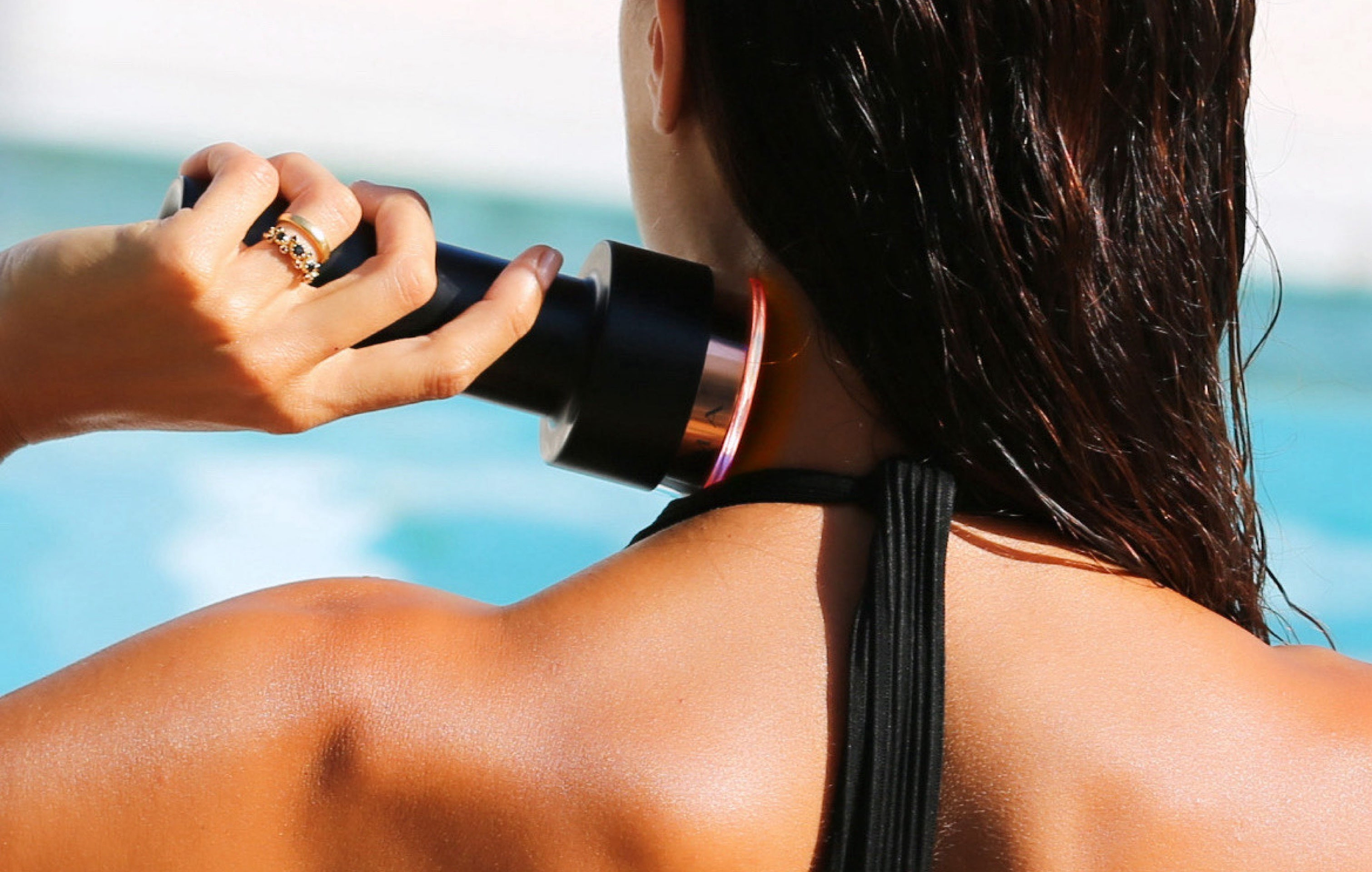
The LYMA Laser PRO delivers the same 808nm near-infrared wavelength validated in the Aesthetic Surgery Journal study - engineered for comprehensive daily home use across every zone of the face and body.
Its 30cm² treatment lens - nearly four times the size of the standard LYMA Laser - makes it the device for women addressing multiple areas: jawline, neck, décolletage, upper arms, abdomen, and thighs.
Zone 1: Jowls & Jawline The combination of fat pad descent, muscle weakening, and collagen loss creates the softened jawline most women first notice in their 40s. Daily treatment from chin to ear delivers consistent regenerative signaling where it matters most.
Zone 2: Neck & Décolletage Thinner skin, fewer oil glands, and frequently overlooked in skincare routines - the neck ages fast. Treatment addresses both horizontal necklace lines and the vertical bands that deepen progressively with age.
Zone 3: Arms Arm laxity is one of the most commonly reported concerns for women over 45. The PRO's larger lens makes full upper-arm treatment practical as part of a daily protocol.
Zone 4: Body Body laxity following weight fluctuation, pregnancy, or cumulative aging responds to consistent daily treatment. Comprehensive coverage - without the cost or commitment of per-zone clinical programmes.
What to expect: the 90-day framework
Surgery produces change in days. Regenerative technology works with your biology - results build as your cells produce new collagen and structural proteins over time.
- Weeks 1–4: Cellular activation begins. Not yet visible - the regenerative signal is being established at the cellular level.
- Weeks 4–8: Early texture and tone improvement. Skin begins to feel different before it looks different.
- Weeks 8–12: Visible firming becomes apparent. Most users report noticeable change by this point.
- Months 3–6: Continued collagen remodelling. Results build as structural protein production progresses.
- Month 6+: Maintenance and preservation. Daily use builds upon accumulated results.
"For women at the early stages of change, you now have an option that is backed by science, requires no recovery, and costs a fraction of a surgical procedure. Five years ago, I couldn't say that with confidence. I can now." - Dr Graeme Glass, Plastic Surgeon & LYMA Aesthetic Director
The complete guide to firmer skin without surgery - backed by science, written for the woman who wants to understand her options fully.
Frequently asked questions
Is laser therapy as effective as surgery for skin tightening? It depends on the severity of laxity - and Dr Glass is clear on this distinction. Surgery is unmatched when significant sagging requires physical tissue repositioning. For early to moderate laxity, the peer-reviewed evidence behind LYMA's 808nm near-infrared laser - including activation of 45 regenerative genes - makes it a clinically credible alternative, without the 2–4 weeks of recovery, sun restriction, or surgical risk.
How long does it take to see results from at-home laser skin tightening? Results develop progressively. The first four weeks establish the cellular activation signal - not yet visible. From weeks 4–8, most users notice early changes in texture and tone. By weeks 8–12, visible firming is typically apparent. Collagen remodelling continues through months 3–6 and beyond. Consistency of daily use matters more than the duration of individual sessions.
Can I use LYMA instead of a facelift? When laxity is severe enough to require physical tissue removal and repositioning, surgery remains the appropriate intervention - Dr Glass is clear on that. For early to moderate laxity, LYMA activates the regenerative gene pathways that surgery doesn't address, without downtime, lifestyle restriction, or the financial commitment of a surgical procedure.
Does the LYMA Laser PRO work on the body as well as the face? Yes. Engineered specifically for multi-zone treatment, the PRO's 30cm² lens - nearly four times the size of the standard LYMA Laser - applies the same 808nm wavelength across face, neck, décolletage, arms, abdomen, and thighs.
Is daily use safe? LYMA's 808nm near-infrared laser uses photobiomodulation - a cold laser technology that stimulates cellular activity without thermal damage. Unlike ablative lasers, there is no injury mechanism. Daily use is not only safe but the recommended protocol; consistent treatment delivers and maintains the regenerative signal that produces visible results over time.
You might also like


